
Beyond the BRI: the volumetric presence of China in Nepal
Published: March 23, 2023
•
Territory, Politics, Governance Volume 12, 2024 - Issue 1
Abstract
This paper conceptualizes ‘presence’ to analyse the volumetric growth of Chinese investment and development in Nepal from 2014 to 2021 in material, territorial and discursive terms. From physical experiences with earthquake disaster to the symbolic potency of Chinese infrastructure, this paper offers presence as a heuristic to evaluate China’s rising prominence in Nepal and multidirectional projections of geopolitical power. The analysis is framed by three key periods: material interactions in 2014–15, including significant increases at scale of Chinese foreign direct investment and Nepal’s invitation and acceptance of Chinese humanitarian aid in pre- and post-disaster contexts; territorial transformations in 2016–19, indexed by diplomatic negotiations and bilateral security commitments over Tibetan and Himalayan populations codified in policy agreements on China’s Belt and Road Initiative (BRI) programme in Nepal; and new discursive depths reached in 2020–21, demonstrated by the paradox that while very little BRI development work has been accomplished to date, China’s growing presence in Nepal is routinely articulated through the BRI. Arguing that volumetric sovereignty over subjects and spaces operates materially, territorially and discursively, I transect a multitude of Himalayan spaces to contribute to more critical understandings of Global China and move the analytical bar not only across Nepal but also, more importantly, well beyond the BRI.
Regions
Themes
Cite This
Murton, G. (2023). Beyond the BRI: the volumetric presence of China in Nepal. Territory, Politics, Governance Volume 12, 2024 - Issue 1. https://doi.org/10.1080/21622671.2023.2186475
Full Text
1. INTRODUCTION
In the past decade, Chinese foreign direct investment (FDI), humanitarian assistance and development aid to Nepal have reached unprecedented levels and reconfigured geopolitical and social relationships between the countries. In 2014, Chinese FDI to Nepal eclipsed Indian FDI for the first time and established Beijing as Nepal’s top source of foreign investment. In the immediate wake of the 2015 earthquakes in Nepal, China launched its largest ever humanitarian effort and Chinese relief was instrumental in emergency and reconstruction phases of earthquake recovery. As noted elsewhere, this was a critical intervention in moments of fraught political tension between Kathmandu and Delhi (Murton & Lord, 2020; Paudel & Le Billon, 2018). More recently, Chinese commitments to infrastructural development in Nepal such as hydropower dams and transnational electric lines, international highways and other connectivity networks have also reached new heights, especially with respect to the frenzy of activity associated with the Belt and Road Initiative (BRI). While Nepal’s reliance on foreign aid and development assistance is nothing new (Fujikura, 2013), Beijing has recently assumed an unprecedented donor and sponsor role in Kathmandu. Together, the social, political and economic implications of this relationship suggest a new dimensionality of Chinese activity in Nepal that this paper conceptualizes as ‘presence’.
As presence, I mean a form of visibility and impact that that is experienced materially, territorially and discursively. Across the Himalayas and with respect to China, this presence is an influential force with transnational implications that reflects how Chinese interventions are welcomed, integrated and leveraged in Nepal. This paper offers the concept of presence as a multidimensional lens to assess geopolitical relations that operate volumetrically, both within and beyond Nepal. Building on recent critical analyses that interrogate how international infrastructure programmes operationalize power volumetrically at new heights, depths and cosmological scales (Woon, 2021; Woods, 2022a), this paper deploys presence to index the importance of contemporary Chinese development programmes that function in multivalent ways, including, but going well beyond, the BRI.
Elsewhere, China’s presence is sometimes articulated in relatively negative registers. This includes state surveillance in ethnically Tibetan minority regions of China (Makley, 2013), Sinophobic tendencies in spaces across China’s borders in neighbouring regions of Asia (Billé, 2016), and the spectre of China as an extractive if not ominous force across Africa (Lee, 2017). In the case of Nepal, however, China’s presence is different. That is, the Chinese capacity to deliver aid and build big things quickly has become a source of discursive promise for the Government of Nepal (GoN) that is grounded by infrastructural capacity and material productivity – such as the generation of hydroelectricity and the significant scaling of international trade relations. Moreover, this promise and China’s wider symbolic presence itself provides Nepal’s leaders with a geopolitical, and territorial, alternative to longstanding dependences on India and historically dominant models – and failures – of Western-led development. However, Chinese power does not operate equally for all, and China’s presence in Nepal also exerts uneven effects on Tibetan exiles and Himalayan borderland populations with close cultural and kinship ties to Tibetan areas of the People’s Republic of China (PRC). As this paper examines below, security over Tibetan peoples abroad is a motivating factor behind Chinese investment and development in Nepal, and a volumetric analysis illuminates the modalities of this extra-territorial power.
For the purposes of this analysis, I draw on Elden’s (2013b) conceptualization of territory as a bundle of political techniques employed to measure land and control terrain. This theorization grounds Sack’s definition of territoriality as a spatial strategy to ‘affect, influence, or control actions, interactions, or access by asserting and attempting to enforce control over a specific geographic area’ (Sack, 1983, p. 55). Ever wary of slipping into the ‘territorial trap’ that privileges state-level analyses (Agnew, 1994), I nevertheless posit territorialization as state-led practices of mastering space conducted through the construction of built environments, the control of capital flows and the formation of new bureaucracies. When looking at the political implications of building infrastructure, leveraging aid and brokering deals, territoriality is rendered visible as both a material and a discursive process that constitutes not only a two-dimensional spatial practice on land but also a three- or even four-dimensional volumetric operation of power (Billé, 2020).
That is, while China’s presence in Nepal is built upon historical infrastructural relations (Murton, 2020) that work across trans-Himalayan spaces, the current nature of this relationship is one that is decidedly future oriented, extending and expanding the possibility of presence well beyond the present context. In the case of this study, but applicable well beyond Nepal, presence serves as a conceptual device to ascertain how different forms of geopolitical and geoeconomic activity generate and fill volumes. These operations occur discursively and diplomatically (McConnell & Woon, 2021), gaining momentum through distinct stages in the production of new power relations.
A volumetric analysis is useful because it captures and illuminates the impacts of international development – including but exceeding Chinese activity – that operate in conjunctural ways (Paudel, 2021). Volumes contain multitudes and function at physical, social, financial, political, cultural and discursive registers. As Woon asserts, ‘critical reflection of the “depth” and “height” of BRI activities gestures to the epistemological and ontological potentialities of illuminating lifeworlds that are distinctly three-dimensional’ (Woon, 2021, p. 289). Responding to Woon’s volumetric intervention in BRI studies and working across socio-spatial scales from the commons to the cosmos, Woods’s (2022a, 2022b) productively applies volumetric thinking to move geopolitical analysis of Chinese development well beyond recent trends that prioritize the economic or techno-political dimensions of BRI infrastructure. Helping to overcome the ‘“horizontal” bias in infrastructure debates’ (Woon, 2021, p. 286), but nevertheless recognizing the primary importance of the BRI’s infrastructural forms, Woods deploys volumetrics to examine and invite the possibility for more expansive ‘ontologies of becoming’.
Building from these theoretical and conceptual foundations – which serve, in other words, as critical infrastructures for my own study – this paper responds to increasing calls to analyse the impacts of infrastructure in ‘volumetric’ terms. To advance this critical project, and in conversation with other papers comprising this special issue, I transect a multitude of Himalayan spaces to examine how Chinese development is experienced and leveraged by different kinds of actors. In so doing, I strive to contribute to more critical understandings of Global China and move the analytical bar not only across Nepal but more importantly well beyond the BRI.
In the case of China in Nepal, overlapping trans-Himalayan sovereignties (Shrestha, 2022; Yeh, 2021) complicate how we read the volumetric operations of extraterritorial power. For Himalayan populations who may be identified, and differentially documented, as special kinds of ‘border citizens’ (Shneiderman, 2013) – including Nepali nationals and ethnic but not necessarily politically exiled Tibetans – the exercise of sovereign power over subject populations does not always operate according to the conventions of national borders or domestic state space. This is clearly demonstrated by Chinese policing of Tibetan exiles and Nepali citizens outside of and across the borders of the PRC, including both public, urban spaces of Kathmandu and rural villages of the Nepal–China borderlands (Murton, 2017; Shrestha & Fluri, 2022).
Infrastructure investment also generates its own kind of political influence, and development across international borderlands facilitates an important spatial diffusion of territorial power that can be read volumetrically. In Voluminous States, Billé argues that:
[c]onceiving sovereign space as volume is crucial insofar as it reflects the three-dimensional nature of modern territorial control. Airport surveillance, maritime patrol, and subterranean monitoring are all integral to maintaining territorial sovereignty, yet these dimensions of bordering are rarely if ever addressed by border studies scholars. (Billé, 2020, p. 5)
Taking this theoretical intervention as a point of conceptual inspiration, this paper examines China’s role in Nepal to show how the volumetric also operates extra-territorially. Echoing but also diverging from volumetric analyses of territory and sovereignty elsewhere in Asia (Billé, 2018, 2020) – such as seasonal patterns of security ‘skirmishes’ in Kashmir (Harris, 2020) or the oozing flows of power across the borders of Bangladesh (Cons, 2020) – the objective here is to examine Chinese development interventions in Nepal as sets of volumetric stages in the making of extra-territorial state presence.
It is also important – indeed, imperative – to recognize that the presence of one country’s political power in the domain of another state (in this case China in Nepal) surely does not – and cannot – operate independently to and distinct from the presence of another foreign actor (e.g., India or America). Bearing this geopolitical reality in mind and in appreciation of its critical relevance, in this paper I nevertheless do not make a comprehensive analysis of how Chinese political power, and presence, in Nepal exists in tension with and response to India’s (or America’s) longstanding investment and development interests in Nepal, and the concomitant presences these processes articulate for and against one another. To be sure, the multilateral nature of presence (materially, territorially and discursively) is a crucial aspect of both the generation and spatial operation of political power, but in the case of this paper, it remains beyond the scope of analysis.
This study of China’s volumetric presence draws from over two decades of social science fieldwork in Nepal, Tibet and the broader Himalayas region as well as sustained but remote content analysis of political and social transformations in Nepal since 2020. Footnote 1 In the case of this study, field research occurred in two distinct and spatially important phases: first, in spring 2015 during Nepal’s earthquake emergency, when I worked together with humanitarian relief efforts in Nepal’s northern border regions where Chinese aid operations were rapid and impactful; and second, in spring 2019, through grounded research in Kathmandu and along Nepal’s northern roadways, both of which are sites of major Chinese infrastructure development and post-earthquake reconstruction (Figures 1–4).
Figure 1. Primary Nepal–China road networks and dry port facilities in Dolakha, Sindupalchowk, Rasuwa and Mustang districts.
Source: Author and Mehran Gandehari, 2017.
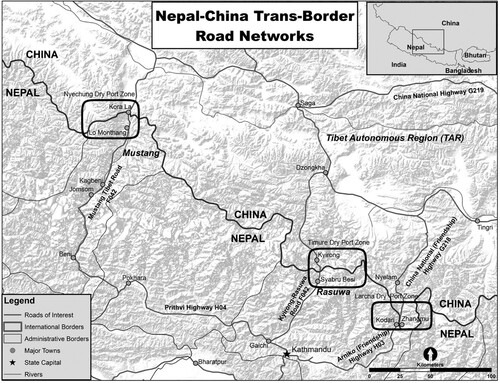
Figure 2. UN OCHA emergency relief map depicting international territorial assignments designated to China, India and the United States.
Source: Author, 2015.
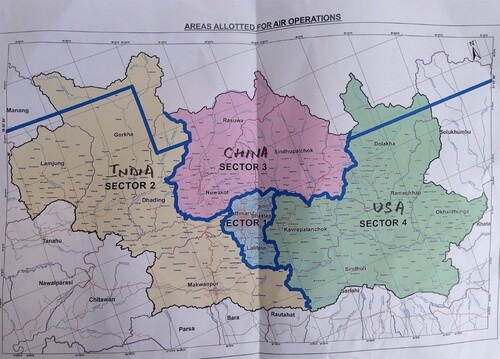
Figure 3. Chinese hydropower construction equipment clearing landslides to open borderland roads in Rasuwa district, Nepal.
Source: Prasiit Sthapit, 2015.
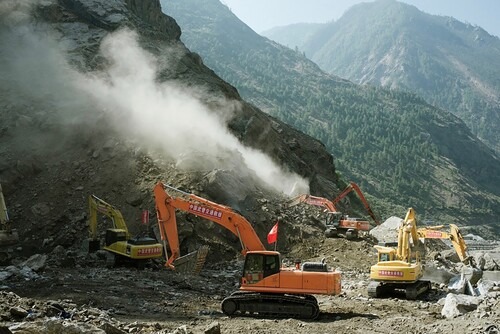
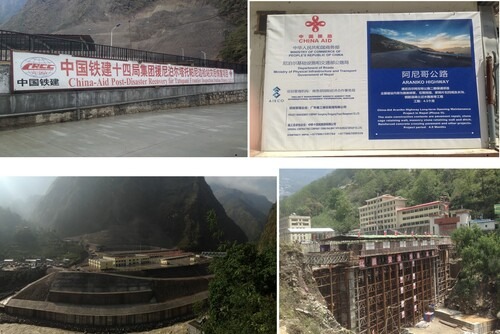
Figure 4. ChinaAid projects in Sindupalchowk and Dolakha districts, Nepal, including new Larcha dry port, repair to Friendship Bridge and ChinaAid signage.
Source: Author, 2019.
Moreover, this period in 2019 was also powerfully characterized by widespread attention to and anticipation of China’s BRI, which itself reached unprecedented levels during President Bidya Devi Bhandari’s high-profile attendance at the 2nd Belt and Road Forum (BRF) in Beijing. During this time, I observed and discussed BRI activities with pundits across Nepal’s media landscape and think tank communities as well as small business owners and roadside entrepreneurs sorely accustomed to waiting for ‘development to arrive’. In addition to long-term in-country fieldwork, since 2020 and the onset of the global COVID-19 pandemic, my research and analysis of geopolitical transformations has primarily used online sources as well as regular correspondence with colleagues and analysts throughout Nepal via social media and online outlets. Drawing on this long-term but focused background research in Nepal, the paper proceeds accordingly: following a short overview on Nepal–China relations in the historical contexts of international aid and development, I trace the development of China’s presence in Nepal in three interrelated and overlapping temporal stages: 2014–15 material interactions, 2016–19 territorial transformations and 2020–21 discursive depths.
Following a seven-decade trajectory of Sino-Nepali infrastructural relations but focusing on 2014–21, this paper makes three key interventions in empirical, conceptual and theoretical contexts. First, I use a case study of post-disaster development interventions to examine the volumetric dynamics of Chinese aid and investment to Nepal. In so doing, I conceptualize how China’s infrastructural and humanitarian activities are invited, accepted, and experienced as a socio-economic and geopolitical presence that goes well beyond popular and more widespread attention to the BRI. Second, I draw on empirical examples of Chinese development abroad, both in Nepal (Paudel & Le Billon, 2018; Paudel & Rankin, 2022) and more widely across South and Central Asia (Woodworth & Joniak-Lüthi, 2020; Yeh & Wharton, 2016) to further theorize how power moves volumetrically through infrastructure, financialization and other development interventions (Lai et al., 2020). In this way, I advance a critical awareness of how Chinese development operates, and one that is not only grounded in local experience but also is not necessarily related to the BRI. Beijing’s global development agenda has garnered an outsized share of analysis in both academic and policy circles since 2017 and this paper aims to move beyond many of these recent, and excellent, studies (Lin et al., 2021; Oliveira et al., 2020; Sidaway et al., 2020). And third, in what follows this analysis also provides some timely perspectives on China’s emergent role as a leader in global development that can be used to further conceptualize new volumetric models of ‘South–South’ development in the current so-called Asian century. Critical volumetric thinking is especially useful because it complicates and destabilizes dominate trends of econometric or statistical analysis, and instead assembles the social, spatial, material and territorial into a complex bundle of enquiry to advance theory and research on the politics and governance of space.
1.1. A brief history of China in Nepal
Nepal’s modern diplomatic relations with China were established in 1955 when Kathmandu opened the country to the outside world after a period of self-proclaimed isolation (Whelpton, 2005). After the Chinese Communist Party (CCP) annexed control over Tibet, political leaders in China and Nepal set out to demarcate the countries’ shared border and initiated a series of negotiations that almost immediately centred around international trade and infrastructure development (Rankin et al., 2017; Murton, 2017). Subsequent treaties and development commitments included the 1961 China–Nepal Boundary Treaty and, soon after that, the China–Nepal Highway Construction Agreement (Jain, 1981). In line with other regional Cold War tendencies, the GoN’s National Planning Commission inaugurated the first in an ongoing series of five-year plans modelled on Soviet and Chinese Communist development programmes. Beginning nearly 70 years ago and continuing through today, Nepal–China ties reflect different sorts of volumetric relationships but also consistently operate on a basis of transnational aid and infrastructure – or what I have elsewhere termed ‘infrastructural relations’ (Murton, 2020).
In recent years, Nepal’s complicated experience with international development has again been accelerated by Chinese foreign aid and investment. Nepal–China relations are still characterized by infrastructure development but are now increasingly articulated through shared visions of international trade corridors linking China and South Asia (Figure 1). While standard patterns of Chinese development as seen elsewhere proliferate in Nepal – namely, state-sponsored aid and private finance deployed through the work of transnational construction firms (Lee, 2017) – new modalities of Chinese assistance are also increasingly ubiquitous in the form of ChinaAid programmes (the erstwhile China International Development Cooperation Agency – CIDCA) dedicated to post-earthquake reconstruction as well as BRI projects. These dynamics have together generated a new kind of Chinese presence in Nepal, one that fills volumetric space and that operates economically, politically and symbolically.
2. MATERIAL INTERACTIONS
The 2015 earthquakes disrupted almost everything in Nepal. In addition to killing more than 9000 people and inflicting incalculable damage to homes, roads and other built environments across the county, the 7.8 magnitude quakes also motivated billions of US dollars in international relief aid that the GoN was unprepared to manage. Ultimately, the disaster disrupted geopolitical relations between Kathmandu, Beijing and Delhi as well as longstanding patterns of humanitarian relief and development aid throughout Nepal; it disrupted the national political climate and accelerated the promulgation of a controversial new Nepali constitution; and it disrupted social relations and community service organizations as people waited for help that was slow to arrive.
As the GoN struggled to distribute the outpouring of international aid to address the needs of its citizens, new spaces opened volumetrically in physical and figurative ways across the national landscape. The first to fill many of these gaps was the humanitarian arm of the CCP, which Nepali leaders welcomed into the national territory for emergency relief operations. This was especially so in Nepal’s northern border districts, such as Rasuwa, where Chinese labour teams and earth-moving equipment were rapidly dispatched from nearby hydropower construction facilities. In a reorganization of national territory and state space, the United Nations Office for the Coordination of Humanitarian Affairs (UN OCHA) emergency cluster and World Food Program (WFP) soon designated Chinese aid teams responsible for both aerial and ground relief and recovery operations across northern Nepal (Figure 2). In retrospect, the earthquakes heralded altogether new engagements between Nepal and China that continue to grow closer and larger today.
Inflicting significant damage in Nepal’s northern districts, the earthquake emergency led Beijing to mobilize its largest-ever humanitarian effort on foreign soil. Physical geography had a profound effect on new forms of Sino-Nepali infrastructural relations, as the earthquakes triggered dozens of landslides that consequently blocked all roads connecting Nepal and China. It is also important to note that (and as I discuss the implications of below) the roads that were closed run through not only Himalayan physical landscapes but also Tibetan cultural landscapes. While the Chinese Embassy in Kathmandu mobilized hydropower construction equipment to help remove landslide rubble and reopen transborder roadways (Figure 3), it also used air assets to evacuate Chinese personnel from nearby construction sites in several border districts. Chinese security forces were also deployed to open overland routes that connect Nepal and China through the Tibetan Autonomous Region (TAR). The Nepali Army was also instrumental throughout the earthquake emergency, from reopening roads and rebuilding bridges to restoring electricity and recovering missing persons. As a collective militarization of volumes, Sino-Nepali efforts to remobilize infrastructure networks were prioritized to alleviate an economic and mobility crisis that threatened to deepen Nepal’s humanitarian emergency.
It cannot be overstated that the 2015 earthquakes broke new ground in Nepal–China relations and helped open a stage for Beijing to act as a larger, global humanitarian player. Responding to numerous crises in Nepal caused by the earthquakes, China performed its new humanitarian role on and through these stages in both spatial and temporal ways, from initial debris removal to more geopolitically motivated provisioning of emergency fuel supplies. Acting on and from a platform that itself garnered global attention and functioning in a sequence of events that generated its own momentum exponentially, Chinese operations were themselves performative. This shows how volumes are made and secured in stages, and the activity that generates such volumetric capacity constitutes a key aspect of presence.
2.1. Earthquakes, aid and blockades
Underscored by post-disaster relief in the aftermath of the 2015 earthquakes, the material dimension of China’s volumetric presence in Nepal combines the financial and the geopolitical. However, new commitments to aid and economic cooperation were underway between Nepal and China even before the spring of 2015 (Aid Data, 2010). For example, Chinese aid packages to Nepal’s northern districts initiated in 2014 represent a vanguard of new Sino-Nepali material partnership. As mentioned above, Chinese FDI to Nepal surpassed Indian FDI for the first time ever in 2014 and Beijing has remained Kathmandu’s largest investor since then. In March 2015, marking the 60th year of Sino-Nepali diplomatic relations, Beijing also committed a five-fold increase to its grant assistance to Kathmandu. The pledged annual amount of 800 million RMB (US$130 million) was earmarked largely for infrastructure development, professional training, technical assistance and security cooperation (Ekantipur, 2015). This financial commitment was itself built on the foundation of past Sino-Nepali infrastructure projects as well as the speculative futures of Chinese hydropower projects in various stage of construction across the region (Sharma, 2014).
Decentring prevailing post-disaster analyses that routinely focus on Nepal’s national capital, Kathmandu, attention to borderlands reveals the critical importance of historically peripheral places to the logics of the state. In the case of China’s rising volumetric presence in Nepal, a Sino-Nepali Memorandum of Understanding (MOU) signed in November 2014 committed 10 million RMB (US$1.63 million) annually from 2014 to 2018 for the development of Nepal’s northern border districts. While most of these areas remain unconnected by road to Kathmandu, the investment of Chinese foreign aid packages for transport infrastructure in Nepal’s northern areas promised local populations access to Chinese markets, hospitals and other resources in the TAR. Beyond road construction, the 2014 MOU also stated that Chinese aid be directed toward small-scale projects for ‘improving local living standards’ through development projects related to healthcare, education, food supplies, energy, etc. (Murton & Plachta, 2021). Moreover, China’s distribution of these aid packages vastly exceeded the amounts initially pledged, with estimates that upwards of 200 million RMB in Chinese aid grants was spent from 2014 to 2018 in Nepal’s border regions alone (Giri, 2019a).
While Chinese aid packages to northern Nepal reached new heights by the fall of 2014, China’s overall aid commitments to Nepal truly jumped scale in spring 2015. Advanced through mechanisms of humanitarian assistance and disaster relief (HADR), Beijing stepped out onto the global stage as a leader of emergency relief aid and post-disaster reconstruction. For example, not only did Beijing launch its largest ever international humanitarian effort immediately following the Nepal earthquakes, but in June 2015, at the International Conference on Nepal’s Reconstruction, the Chinese Foreign Ministry committed RMB 4.7 billion (US$480 million) for infrastructure repair and development across Nepal (Giri, 2015).
In a complex moment of international intrigue, Beijing’s aid and development programmes to Nepal filled emergency vacuums with humanitarian volumes and set in motion ongoing financial commitments that keep growing. In the first half of the 2016–17 fiscal year, for example, Nepal received over two-thirds of its total FDI from China (Murton & Lord, 2020) and comparable levels of financial and infrastructural assistance continue to operate. Building on new levels of Chinese FDI and HADR established after the earthquakes, ongoing Chinese material contributions to Nepal include, but are not limited to, hydropower and telecommunication network development, Confucius Institutes in Nepal and scholarships for Nepali students in China, and the steady rise of Chinese imports to Nepal which in 2020 comprised over 15% of Nepal’s total imports (Pal, 2021).
The 2015 earthquakes also precipitated geopolitical, social and constitutional crises in Nepal. Regional politics shaped emergency relief, with both India and China vying to provide first response in particular districts. Adding to rather than alleviating the pressure of the moment, foreign embassies leaned on the GoN and the UN either to block or to allow air-serviced humanitarian efforts in sensitive borderland areas. A case of geopolitical sensitivities shaping humanitarian operations (Figure 2) the UN OCHA and WFP designated specific regions for India and China to operate their respective relief efforts. In the following months, Chinese aid to Nepal grew significantly more important to the nation in both material and symbolic ways. Recalibrating Nepal’s historical but widely unpopular dependency on Indian aid and investment, the earthquakes motivated political action on a long-awaited constitution which itself transformed Nepal’s federal structure but also caused further crises of citizenship. These policies subsequently set in motion new terms of bureaucracy and territory that were widely rejected, eventually leading to an ‘unofficial blockade’ along the Nepal–India border.
The blockade began shortly after Nepal promulgated a controversial constitution of which the Hindu-majority political parties in Nepal’s southern plains and the Indian government openly disapproved. Lasting four months, the blockade effectively shut down all legal commerce and paralysed the delivery of Nepal’s petroleum supplies (100% of which the Nepal Oil Corporation historically bought from India), creating a dire national fuel crisis (Rinck & Adhikari, 2016). Post-earthquake reconstruction work was significantly delayed and the construction of several ‘national priority’ infrastructure projects ground to a halt, prompting renewed anxieties about chronic energy insecurity (Shrestha, 2016). In response to this emergency, politicians highlighted the need to decrease Nepal’s dependence on India and enhance Nepal’s national ‘energy sovereignty’ (Lord, 2018). This crisis also prompted a strategic and symbolic move whereby Nepal’s then-Prime Minister K. P. Oli turned to Beijing (and away from Delhi) to provision emergency fuel supplies (Poudel, 2018). With much diplomatic fanfare and media coverage, Chinese authorities delivered 12 metric tons of petrol to Nepal via the Kyirong–Rasuwa Pasang Lhamo Highway. While this delivery was ultimately no more than a fraction of Nepal’s overwhelming petroleum needs, its symbolic and geopolitical significance was exponentially greater than its material volume. In other words, these fuel relief actions reinforced the perception of China as a benevolent neighbour, framing China’s presence in a moment of crisis as one less aggressive and more reliable than India.
In a multitude of ways, the 2015 earthquakes generated new emergency space in Nepal that was expediently filled by Chinese humanitarian interventions. In terms of both new and ongoing aid programmes, it is true that Nepal’s political leadership invites, accepts and leverages Chinese assistance for its own state-making purposes while Beijing at the same time gains extra-territorial power as a return on its investments. Thus, just as China scales up its portfolio in Nepal, the Nepali state advances its own presence through formations both physical (infrastructural capacity) and discursive (modernity, known as bikas in Nepal). As previously noted elsewhere but still true today:
though China wields near-overwhelming bargaining power, Nepal indeed maintains agency in the process of accepting Chinese interventions, and it is important to see how a small state like Nepal can in fact use China to support its own state-making agenda, instead of just the other way around. (Murton et al., 2016, p. 23)
When looking back to the November 2014 Nepal–China MOU and China’s March 2015 commitment to increase grant and aid packages, it becomes apparent that the earthquakes compounded existing needs for vulnerable and marginalized communities in Nepal and simultaneously broke new ground for greater volumes of Chinese HADR. Reflecting CCP anxieties over Tibetan exile populations (Human Rights Watch, 2014), Chinese aid and infrastructure packages to Nepal have also established new modalities of extra-territorial and sovereign power exercised via development. As the section below examines, this dynamic is evident as China’s former ‘Going Out’ strategy morphed first into new iterations of the BRI and then, more recently, as state-led humanitarian programmes facilitated by ChinaAid.
3. TERRITORIAL TRANSFORMATIONS
Beijing’s humanitarian and developmentalist interventions have led to significantly closer Sino-Nepali ties in material ways and these activities articulate a new kind of extra-territorial Chinese power in Nepal. The provision of aid and the construction of roads has, for example, paved the way for the formulation of new contracts, agreements and MOUs that specify ever closer partnerships related to both states’ security interests. While Nepali security includes energy sovereignty as well as greater autonomy from longstanding dependencies on India, China’s security concerns have much more to do with potentially restive Tibetan exile communities and Nepal’s subscription to the One China policy itself (Szadziewski et al., 2022, p. 138). As such, China’s volumetric presence in Nepal is profoundly territorial.
Another volumetric turn in Nepal–China relations was launched in 2016. This turn is marked by increasingly interconnected linkages between foreign investment, infrastructure development, and transnational security and formalized aspects of this relationship were codified between Kathmandu and Beijing in 2017 and 2018. New bilateral agreements and MOUs specifically articulate political connections between development initiatives and practices of territorialization, and these processes operate across the Himalayas region in the uniquely sensitive spaces (Cons, 2019) of ethnically and culturally Tibetan landscapes (Shrestha & Fluri, 2022).
Revealing what Beijing prioritizes and gains through financial assistance to Kathmandu, analysis shows that China’s development activity in Nepal primarily comprises, but is not limited to, the following three key dimensions: the development of energy resources and access to hydropower infrastructure; the expansion of transport corridors for increased export and trade to Nepal and India; and close observation of and control over Tibetan populations in Nepal (Gurung, 2021; Murton & Lord, 2020; Paudel & Le Billon, 2018; Shrestha, 2022). With the 2019 BRF in Beijing and subsequent negotiations over China’s BRI commitments to Nepal, the bond between Chinese infrastructure development and conduct of extra-territorial power in Nepal grew ever closer. Advancing from the material commitments examined above, the following section follows this geographical path to reveal crucial steps in joint capacity-building and how the territorial production of China’s presence in Nepal operates in the strategic service of Nepal’s own state-making agenda.
3.1. Diplomacy, connectivity and security
Since 2016, Nepal–China infrastructural relations have largely been characterized by combined and collaborative processes of state-making and post-disaster reconstruction. In the aftermath of the earthquakes, diplomatic statements, protocols and agreements between the GoN and CCP escalated in frequency and importance. On an official visit to Beijing in 2016, Nepali Prime Minister Oli signed a series of significant agreements in areas of trade and transport infrastructure, border connectivity, and financial cooperation. The 15-point Joint Statement between the People’s Republic of China and Nepal summarizes the material and extra-territorial outcomes of these meetings (Ekantipur, 2016). Articles 5, 6 and 8 of the Joint Statement speak to ongoing collaborations on infrastructure development, transborder connectivity and energy security; Articles 3 and 9 address Kathmandu’s growing service to Beijing with respect to control over Tibetan populations, including, but not limited to, illicit and irregular border crossing and extradition agreements (Ekantipur, 2016). Amongst other diplomatic achievements, at the same meeting both countries also approved mutual commitments to pursue additional negotiations toward an Agreement on Transit and Transportation, a Treaty on Mutual Legal Assistance in Criminal Matters, and a Treaty on Extradition to control transnational crimes and illegal border crossing.
Couched in terms of mutual respect for sovereignty and increased cooperation and connectivity, the Joint Statement established direct and explicit linkages between Chinese investment, infrastructure development and the management of culturally Tibetan and Himalayan borderland populations in Nepal. To be clear, the Statement explicitly emphasized a ‘firm commitment to respect each other’s independence, sovereignty and territorial integrity, respect and accommodate each other’s concerns and core interests’ (Ekantipur, 2016). Signed in the aftermath of the earthquake emergency and during a time of extreme geopolitical tension between Kathmandu and Delhi that escalated and deteriorated following the fall and winter of 2015 fuel blockade and ethnic conflict in southern Nepal, the Joint Statement was finalized just months before Kathmandu cancelled a state visit to Delhi by Nepali President Bidya Devi Bhandari and the GoN recalled Nepal’s ambassador to India (Ekantipur, 2016).
Fundamentally, the Joint Statement also signalled Nepal’s frustration in its political relationship with India and reflected the Communist Party of Nepal’s (CPN) earnest effort to forge closer ties with Beijing as a counterbalance to historical dependencies on the Indian government in Delhi. To help meet Nepal’s energy demands, China committed to build petroleum storage facilities and conduct feasibility studies for oil and gas exploration in Nepal. To increase airlinks between the two countries, Beijing also pledged financial assistance for the Pokhara Regional International Airport. Finally, several road construction and upgrade-improvement projects were further detailed in the Joint Statement, augmented by Beijing’s 3 billion RMB grant for post-disaster reconstruction (Ekantipur, 2016). Several of these plans were identified as early One Belt One Road (OBOR) projects for Nepal, later outlined and integrated within Nepal’s bespoke BRI framework.
While the initiation of formal dialogue about Nepal’s official inclusion in the BRI began in 2015, Nepal ultimately signed onto the BRI in May 2017. At that time, Nepal’s Prime Minister Oli submitted to China’s Prime Minister Li Keqiang a 35-item list of proposed BRI projects for Nepal. The list focused on development initiatives in the fields of infrastructure, energy and power, commercial economic corridors, special economic zones, and border check posts, with a total estimated investment of US$10 billion (Giri, 2019b). Chinese officials’ response requested Nepal to identify and shortlist a more achievable target; following two years of protracted negotiations, nine projects were submitted for inclusion in Nepal’s BRI programme development. While Nepal’s political leaders and media pundits imagined that these nine projects would generate new volumes of connectivity and security between the countries, even today, many years later, relatively little substantial progress has yet been made on Nepal’s BRI programme.
In addition to settling on nine key projects as an achievable BRI framework for Nepal and coordinating new policy procedures for greater trade and transport connectivity, at the 2nd BRF diplomats from Kathmandu and Beijing also established new bilateral commitments for surveillance and security in the countries’ shared Himalayan borderlands. As a mechanism to assuage Beijing’s anxieties over restive Tibetan populations both inside and outside of the PRC, a subsequent List of Instruments Signed and Exchanged between Nepal and China was formalized in October 2019 during Xi Jinping’s state visit to Nepal. This List of Instruments further outlined new surveillance systems inextricably linked to BRI projects. Most conspicuous of these mechanisms are the Agreement between the Governments of Nepal and the PRC on the Boundary Management System, the Treaty between Nepal and the PRC on Mutual Legal Assistance in Criminal Matters, and the Exchange of Letter for Border Security Equipment and Office Equipment (MoFA, 2019). Finally, the GoN’s accommodation of and acquiescence to the CCP’s extra-territorial demands also comes forth in its renewed observance of the One China policy. At once securitizing and mobilizing volumes in distinct and differential ways, the above commitments were imagined, on the one hand, to significantly harden the border for some things (such as the movement of people) but, on the other, to soften and enable more open borders for other things (such as commodities and commercial goods).
The GoN’s agreement to uphold Chinese policy over Tibetan peoples and support Beijing’s ideology of national unity is also expressed and embedded within recent Sino-Nepali infrastructure development programmes. Foremost among these is the Nepal–China Trans-Himalayan Multi-Dimensional Connectivity Network (Connectivity Network). Yet another bilateral, infrastructure–security mechanism to control volumes, the Connectivity Network prioritizes the operationalization of six economic corridors between Nepal and China with enhanced border facilities for trade and security as well as advanced transportation systems. At the 2nd BRF, Nepali President Bhandari promoted the significance of this project in terms of national and regional imaginaries of geoeconomic opportunity (Bhandari, 2019):
The development of a ‘Trans-Himalayan Multi-Dimensional Connectivity Network’, including the Nepal–China Cross-Border Railway, will boost connectivity not only between Nepal and China but other countries in the region. After a prolonged political transition, Nepal has achieved political stability. Our objective ahead is to bring about visible transformation in the living standard of our people.
A further dimension of Sino-Nepali infrastructural relations, the great expectations surrounding this so-called Connectivity Network represent Nepal’s early embrace of grand and ambitious BRI development and also points attention to how China’s volumetric presence in Nepal is perceived and disseminated in material, territorial and discursive ways.
The Connectivity Network was also a highlight of Chinese President Xi Jinping’s state visit to Kathmandu in October 2019. Moreover, Xi’s physical presence in Kathmandu significantly helped to further build China’s greater voluminous capacity across the country. Xi was the first Chinese president in two decades to visit Nepal and BRI negotiations enthralled the Nepali media and captured spectacular amounts of national attention during his time in the capital city. During the visit, Nepali and Chinese officials signed 18 more MOUs and two letters of exchange, further cementing what has been called a ‘strategic partnership’ motivated by national priority projects and deeper energy, transport and security collaboration (Ekantipur, 2019). In the face of previously stalled BRI discussions between Nepal and China, agreements about the Connectivity Network were quickly perceived as a great success in Kathmandu and Beijing.
However, it also bears noting that except for preliminary environmental impact assessments related to the Kyirong–Kathmandu trans-Himalayan railway, Nepal has so far failed to make more than relatively minor progress on any other infrastructure projects negotiated for inclusion in the BRI. Even before the onset of the global coronavirus pandemic, Nepal’s proposed BRI programme remained in limbo because of uncertain financial modalities and indecision between loan or grant based funding schemes, government transitions, and paralysing political wrangling. And yet, Chinese investment and development remains highly impactful across Nepal and indexes how China’s volumetric presence goes well beyond the BRI.
In addition to articulating new networks of physical, economic and political linkage between China and Nepal at national and regional scales, the Connectivity Network and other bilateral development programmes, BRI and otherwise, also operate at tangible local levels in Nepal’s northern border areas. For example, newly elected leaders of Nepal’s rural municipalities are regularly invited to larger cities in China’s Tibetan provinces to discuss ongoing aid packages. This kind of humanitarian and development support includes the provisioning of excavators and road construction materials, blasting devices, solar lights and other instruments for advancing rural development (Murton & Plachta, 2021). Importantly, these localized development programmes also coincided with the early operations of the CIDCA throughout the region.
Established in 2018, CIDCA was China’s first independent foreign aid agency, mandated to ‘strengthen the strategic planning and overall coordination of foreign aid’ (Sun, 2019). It is now more widely identified across Nepal, as well as broader global landscapes, as ChinaAid. Tasked with a responsibility to better centralize China’s foreign aid policies, the structure of decision-making, budget allocation and project implementation behind CIDCA–ChinaAid programming in Nepal remains relatively unclear. However, these sorts of initiatives nevertheless show how the materiality of volumes and bilateral collaboration operates across scales, as Sino-Nepali infrastructural relations are constitutive of municipal and rural ties as much as state-level diplomacy.
Foreign investment and previously BRI-related but now more general Chinese development programmes in Nepal enable the CCP to implement new surveillance operations and leverage extra-territorial power over spaces beyond the borders of the PRC. At the same time, these initiatives also allow Nepal’s political leadership to flex state muscle through bureaucratic, infrastructural, and capacity-building measures. From the urban capital to borderland villages, the spaces targeted for much of this investment and development are sites that Beijing sees as posing Tibet-related threats abroad. However, this is not an altogether new geopolitical dynamic or only related to current terms of Chinese aid and investment to Nepal. Since 2008 and influenced by the Chinese Embassy in Kathmandu, the GoN has placed increasingly strict limitations on Tibetan communities within its territory. This turn came in the wake of widespread protests aimed against the CCP that erupted across Tibetan provinces of the PRC in spring 2008 (McGranahan & Litzinger, 2012). For Beijing, control over Tibetan populations throughout Nepal is therefore another example of ‘securing volumes’ (Elden, 2013a) in socio-spatial and extra-territorial ways.
Today in Nepal, the control over Tibetan bodies and mobilities is severe. Shrestha and Fluri (2022) show that Chinese extra-territorial power over foreign Tibetan subjects in Nepal can be read as analogous to the American policing of bodies and space in Afghanistan before the recent Taliban takeover. The restrictions over Tibetans in Nepal include prohibitions on public assemblies for spiritual and community celebrations in urban areas of Kathmandu as well as widespread detention of Tibetan refugees under dubious criminal accusations (Human Rights Watch, 2014). In Boudha, a major Tibetan enclave of the capital city, many Tibetans express concerns over Chinese spies increasingly present in the neighbourhood, a feeling of surveillance compounded by closed circuit video cameras installed on street corners and above alleyways to monitor public gathering places. As panoptical conditions in Kathmandu increasingly resemble the disciplinary circumstances in Chinese Tibet from which thousands of Tibetans have fled over the past six decades, experiences with the growing Chinese presence in Nepal cause many Tibetan exiles to say that Boudha now feels like the surveilled spaces of Lhasa they had escaped.
The Sino-Nepali co-production of regional connectivity occurs at variegated material and territorial levels. Generating a stronger Chinese presence abroad, this process includes rewriting geopolitical alliances, advancing Nepali national dreams of bikas as the modernization of the state and its citizens, and controlling the movement of individual Tibetan bodies in space. Particularly across sensitive trans-Himalayan borderland regions, as a frontier of infrastructure development and geopolitical intrigue (Cowan, 2016), Chinese interventions facilitate some translocal mobilities while they foreclose others. This strategic paradox simultaneously keeps some volumes moving (such as commodities and exports) and others under control at the same time (such as exiled Tibetans and other Himalayan peoples living in the Nepal–China borderlands). Undergirding the expansion of regional trade, agreements for greater international connectivity also increase state security for both Kathmandu and Beijing.
4. DISCURSIVE DEPTHS
Augmenting the voluminously material and territorial processes examined above, the discursive power of China’s presence throughout Nepal is evident in two fundamental but paradoxical ways. First, innumerable Chinese development projects are identified and called BRI even when they have nothing to do with the BRI. In public conversation as well as popular perception across the country, decidedly non-BRI projects – such as rural hydropower and road development programmes or post-earthquake urban reconstruction efforts that are not included in Nepal’s nine-project BRI framework – are called ‘BRI’ because the Belt and Road has brand recognition and instils confidence in Nepali constituents; in other words, the BRI gets work done in name alone. Second and conversely, actual BRI projects are relatively invisible, sometimes because very little work has yet been accomplished and, at other times, because such projects are routinely absent from cartographic representations.
At once foregrounding and backgrounding a volumetric state, that which counts, and is funded as, BRI across the Himalayas region remains missing from most maps (Murton, 2021). This invisibility, and concomitant blanks on the map, allows the BRI to remain fuzzy and flexible but with an appearance of inevitability (Grant, 2018; Narins & Agnew, 2019). Thus, that which is (BRI) is not even there, while that which is not (non-BRI) is made out to be such. And this paradoxical play reproduces its own discursive power, in voluminous ways. As others have noted with respect to the discursive power of Chinese development (McConnell & Woon, 2021), this contradictory reality means that analyses of Chinese development must effectively and consistently go beyond the BRI.
The traction and presence-making of the BRI as a label, a brand and a promise gained a strong foothold in Nepal by 2019. While the global coronavirus pandemic delayed the construction of most BRI infrastructure programmes in Nepal and almost everywhere else, numerous Chinese-led development projects have nevertheless progressed since that time (Pal, 2021). This includes activity in urban enclaves as well as rural regions, environments both central and peripheral to Nepal’s historical state-making apparatus. For example, major widening and expansion projects of the Kathmandu Ring Road undertaken by Chinese contractors have continued apace (Plachta, 2021) while repairs to earthquake-damaged Chinese-built hydropower facilities in northern districts such as Rasuwa and Dolakha also progress. Although these kinds of Chinese development projects are not part of Nepal’s BRI portfolio, they are nevertheless referred to as BRI activities by a range of actors, from Nepali politicians to rural municipality leaders to academic analysts (Paudel & Rankin, 2022).
This third section shows that the misidentification of non-BRI projects discursively helps to build China’s volumetric presence both in and beyond Nepal. To make this point, I review several high-profile, Chinese-led infrastructure development and earthquake reconstruction projects in Nepal since early 2020. While none of these projects is officially part of Nepal’s BRI framework per se, they are widely perceived and enunciated as BRIs. Consequently, projects such as these do important discursive work for and about China’s capacity to get things done. And this work, in turn, further expands China’s volumetric presence in Nepal.
4.1. Misplaced monikers and what is missing from the map
ChinaAid activities reflect how slippage in terminology generates discursive power. For example, many Nepal-based Chinese-led reconstruction projects, ongoing since 2016 but mostly realized only in late 2019 and early 2020, have been led by China’s international aid agency. Such projects include major repairs to many of Kathmandu’s United Nations Educational, Scientific and Cultural Organization (UNESCO) World Heritage Sites such as the Basantapur Royal Palace, the temples of Patan and Bhaktapur’s Durbar Squares, and the capital city’s historical, central Durbar High School (Pal, 2021). Signage at these project sites is plastered with the ‘ChinaAid’ logo, a new symbol that now appears more ubiquitous in Kathmandu than previously more prominent aid agency labels such as USAID or the German Agency for International Cooperation (GIZ).
Outside of Kathmandu, first CIDCA and now ChinaAid have also spearheaded massive reconstruction and redevelopment undertakings related to international transport infrastructure. This includes, most conspicuously, repairs to the damaged Friendship Bridge, the first – and, for more than 50 years until 2014, the only – land crossing between Nepal and China at the Kodari–Zhangmu border. Downstream from the bridge, CIDCA/ChinaAid have also completed repairs to the damaged Friendship Highway itself, first built, as mentioned above, in the 1960s as an early transnational and bilateral development project at the advent of modern Sino-Nepali international relations. Moving still further downriver along the road, the long-awaited opening of the Larcha Dry Port as Nepal’s first model of a major inland cargo transfer centre was also finally completed by CIDCA/ChinaAid in 2019 (Figure 4). It is important to note that completion of these projects occurred just months before the onset of the COVID-19 pandemic, at which point both the border and the port were summarily closed and all trade and traffic suspended (Cowan, 2021).
This sample of ChinaAid projects represent many more Chinese development programmes that refract across Nepal. Such infrastructural initiatives also reflect the impact of China’s aid and relief efforts at scale. And discursively, these kinds of projects are also widely perceived as BRIs even though they are not officially BRI related. From the recent expansion of Kathmandu’s Ring Road to slow progress on the Budhi Gandaki Hydropower Project to the delayed construction of Pokhara’s Nijgadh airport, massive construction projects that are not part of Nepal’s BRI portfolio are articulated and enunciated as BRI programmes by general citizens, policymakers and even analysts themselves (Murton & Plachta, 2021; Paudel, 2021). Conversely, the very programmes that are in fact central to Nepal’s nine-project BRI framework – such as building the Kyirong–Kathmandu railroad and the transnational transmission line or upgrading the Nepal–China border crossing at Rasuwaghadi and highway to Kathmandu – remain all but suspended, gathering dust many years after first being proposed and integrated into Nepal’s BRI vision.
Up to now, BRI development in Nepal has in most cases not really happened, but many other Chinese infrastructure programmes have progressed relatively rapidly. This then presents a critical contradiction: on the one hand, Chinese development such as that related to ChinaAid is completed and erroneously articulated as BRI activity; and, on the other, actual BRI programmes are frozen, yet the BRI name and brand remains potent. What might happen going forward, however, remains uncertain. No matter the future development outcomes, this paradox itself generates a discursive power that in turn reproduces itself in volumes, as infrastructures articulate politics while politics routinely articulate infrastructure development.
Without a doubt, Chinese development projects – mapped and unmapped, BRI and non-BRI – help accomplish many joint Sino-Nepali objectives of territorialization and this forms a crucial basis of the countries’ infrastructural relations. This is particularly true for the new roads and aspirational railways crisscrossing Nepal and the wider Himalayas. While the Nepali state, Western donors and Indian largesse have failed to deliver on countless infrastructural promises over the decades, China has effectively fulfilled some significant initial commitments to infrastructural investment and development. In so doing, Chinese construction capacity, both perceived and received, produces a hopeful anticipation across Nepal’s citizenry. And in turn, this discursive power gets translated into territorial and volumetric leverage that Beijing increasingly exercises abroad.
Today, however, as the BRI fades from the headlines, questions arise as to what Beijing promises to deliver, and how China intends to operate in a hopeful post-COVID world. These questions are especially pressing in places acutely affected by climate change, such as the Himalayan cryosphere and, more importantly, for communities living downstream from the high mountain Third Pole. Attention to these uncertain realities brings focus to the importance of international infrastructure development in the face of urgent Anthropogenic futures.
5. CONCLUSIONS: GAUGING EXTRATERRITORIAL POWER THROUGH VOLUMETRIC PRESENCE
Presence is produced by a discernible process and registered volumetrically. In many ways, China’s presence in Nepal was flatter before the 2015 earthquakes, and post-disaster activity has served to deepen, raise and broaden Sino-Nepali relations. Much like the ‘gift’ of development that defines the CCP’s state investments in Tibet (Yeh, 2013), presence may well also be both a ‘promise’ and a ‘poison’. Of course:
for a country that symbolizes the many failures of international development, and as political stability, energy security, and post-disaster economic momentum are [still] desperately needed in Nepal, it is [still] difficult for Kathmandu to decline the ‘gift of development’ from Beijing. (Murton et al., 2016, p. 5)
Just as development has long been shown to operate unevenly (Smith, 1984), China’s presence in Nepal is experienced unevenly, too. Its materiality is received enthusiastically by some – such as Communist Party politicians and national citizens long neglected by the state – but surely not by many others. This goes for its territorial implications for Tibetan political exiles as well as Himalayan communities for whom Chinese aid might equate to forms of repression and surveillance. Furthermore, while the construction of built environments characterizes China’s historical engagements in Nepal, its current presence operates at far greater and multidimensional volumes. That is, Chinese presence also involves future-oriented commitments to capacity-building via education and soft power diplomacy, new policy frameworks and MOUs to manage borderlands populations, and the rhetorical and discursive power of development that now goes well beyond the BRI.
At this time, only some of China’s investment and development commitments to Nepal have been realized and materialized but Chinese presence expands in volumes despite project delays and suspended outcomes. From urban road improvements and historical monument restoration to major repairs of hydropower facilities and the completion of dry ports in Nepal’s northern border regions, most Chinese development projects are not BRI related, and many others have been delayed due to the COVID-19 pandemic. Nevertheless, volumetric presence grows apace. In other instances, many grandiose Chinese development programmes remain aspirational and perhaps only imaginary, unrealized and still but just a dream. This applies to highly anticipated things such as the Kyirong–Kathmandu railroad as well as the Nepal–China Trans-Himalayan Multi-Dimensional Connectivity Network. Ironically or not, it is these yet-to-be realized material projects, and the volumes that they have promised to mobilize and secure, that were at one point the core of Nepal’s BRI framework.
As shown above, many Sino-Nepali BRI projects remain stalled on the ground in a material sense, and yet the BRI brand nevertheless still gets territorial work done, often accomplished through discursive means. For example, while the actual infrastructures – or material commitments – of China’s BRI programme to Nepal may well never get built, the territorial commitments – or apparatuses of bilateral state security, observance of the One China policy, and agreements to extradition – are already in force. In other words, the material and territorial work together, a dialectical conjuncture and co-production in the making and securing of ever greater volumes, both advanced and reinforced by presence.
This then raises another crucial paradox: even if China’s territorial powers are more impactful than many material initiatives, it is attention to the latter material aspects of Chinese development that remain conspicuous and potent, while the former territorial practices are far less obvious to all but those most directly affected. That is, Tibetans and many Himalayan populations in Nepal experience China’s presence as a powerful, extra-territorial force. Conversely, urban denizens and those still dreaming of a more modern and interconnected Nepal see China’s presence as a promise to bring about bikas and development right where the Nepali state and other international actors have for so long largely failed.
Accordingly, it is a distinct discursive dimension of China’s presence in Nepal that resolves the dialectical tensions between material shortcomings and territorial impacts. In other words, discourse has become the ultimate essence of China’s presence in Nepal. This discursive dialectic also applies in increasingly urgent and acute ways far beyond Nepal, especially where state surveillance and territorial control bridge China’s domestic and internationalist developmentalist agenda, such as Xinjiang, Kazakhstan and other sensitive spaces of global infrastructure (Szadziewski et al., 2022; Woods, 2022b).
It is not a simple thing to measure discourse, or to assess discursive power volumetrically. But to hazard a try, I suggest looking at the social practices and geopolitical relationships that articulate and reproduce such discourse, and to do so with a volumetric lens. Just as material investments and territorial practices together constitute capacities for volumetric sovereignty, the volumetric can also be read discursively and evaluated ethnographically and geopolitically. And presence is what emerges from such readings.
In conclusion, but also looking ahead, what is happening in Nepal matters across space and scale. Although Nepal is a relatively small state neighbouring China, the material, territorial and discursive processes at work there match similar volumetric dynamics of Chinese investment and development around the world. As an ethnography of geopolitics that applies within and outside of South Asia, this study conceptualizes volumetric presence to help move other analyses of Chinese development beyond the BRI. Thinking with presence provides a critical way to apprehend and evaluate territorial volumes of power, including but vastly exceeding China and its global multitudes.
ACKNOWLEDGEMENTS
I thank Mia Moy Bennett and Klaus Dodds, guest editors of the special issue ‘Earthly volumes, voluminous materialities: working with apprehension’, for excellent feedback and guidance on early iterations of this article. I also thank all my fellow participants at the 2021 AAG Annual Meeting panel sessions, and the lively discussions we had online, from which this paper was spun. Additionally, my gratitude to Md. Tayyab Safdar and Brantly Womack at the University of Virginia ‘Assessment of the Belt and Road Initiative’ for constructive comments on previous drafts, and talks, of this project. Lastly, I thank Chih Yuan Woon, Jenny Case, Virginia Mamadouh and two anonymous reviewers for critical and incisive comments and provocations that substantially improved the paper along the way. All errors are mine alone and the usual standard disclaimers apply.
DISCLOSURE STATEMENT
No potential conflict of interest was reported by the author.
Additional information
Funding
This work was supported by European Commission Marie S Curie Individual Action Fellowship: [Grant Number # 751131 (Road Diplomacy)].
Notes
1 Qualitative research methods included multi-sited interviews and mobile forms of participant observation between centrally urban and northern borderland regions of the country; this generated grounded data that form the empirical basis of my analysis.
2 Across Nepal’s northern borderlands, earthquake aid was delivered through a combination of community-based responders, modest government support and myriad international actors. Largely left off the international non-governmental organization (NGO) relief map and with a central government severely underprepared to manage a crisis at the national scale, communities in northern districts such as Mustang, Gorkha, Rasuwa, Dolakha and elsewhere launched grassroots efforts to solicit and deliver aid from relatives, friends and donors in Kathmandu and abroad.
3 Frustrated by inexplicable prohibitions on flight space to Kathmandu and the use of open tarmac at Tribhuvan International Airport, at OCHA meetings at the Nepal Army Club in May 2015, I witnessed intense arguments between ranking leadership of the UK, US and Japanese militaries regarding the deployment of relief units to particular districts in need.
4 Efforts to reinforce state legitimacy and thereby improve the relationship between the Nepali state and its citizens are often predicated on the Nepali notion of bikas, or development. ‘Coalescing over several decades and numerous political struggles, this rhetoric [of development] has come to equate the legitimacy of the government with national unity, progress, and patriotism itself. A particular arrangement for control over resources and political alliances thus became inextricably linked to the unassailable cause of national development’ (Pigg, 1992, p. 49).
5 Nepal’s BRI framework includes the following nine projects: upgrades to the Rasuwagadhi–Kathmandu road; construction of the Kimathanka–Hile road; construction of a new road from Dipayal to the Chinese southern border; improvement to the Tokha–Bidur road; construction of the Galchhi–Rasuwagadhi–Kerung 400 kV transmission line; building of the Kyirong–Kathmandu railroad; construction of the 762 MW Tamor hydroelectricity project; building the 426 MW Phukot Karnali hydroelectric project; and construction of the Madan Bhandari Technical Institute, named after Madan Bhandari, a previous communist leader (Murton & Plactha, 2021).
More Research
1/2