
Home / Research / CHILQUINTA: WHEN A CHILEAN ELECTRICITY GRID BECAME PART OF CHINA'S GLOBAL UTILITY NETWORK
CHILQUINTA: WHEN A CHILEAN ELECTRICITY GRID BECAME PART OF CHINA'S GLOBAL UTILITY NETWORK
Author: Ignacio Tornero
Published: November 17, 2026
Abstract
In June 2020, China’s State Grid Corporation of China (SGCC), the world’s largest electric utility company, completed the acquisition of Chilquinta Energía, one of Chile’s largest electricity distribution groups. The transaction transferred control of a century-old electricity network serving hundreds of thousands of consumers in Chile’s Valparaíso Region to a subsidiary of a Chinese state-owned enterprise supervised by the State-owned Assets Supervision and Administration Commission (SASAC) of China’s State Council. The acquisition represented an additional milestone in the internationalization of Chinese state-owned enterprises and in the growing presence of Chinese capital in Latin America’s strategic infrastructure sectors. The Chilquinta case illustrates broader debates surrounding foreign ownership of critical infrastructure, the global expansion of Chinese state-owned enterprises, and the challenges technical agencies face when evaluating investments that originate from economic systems whose institutions differ significantly from their own.
Regions
Cite This
Tornero, I. (2026). CHILQUINTA: WHEN A CHILEAN ELECTRICITY GRID BECAME PART OF CHINA'S GLOBAL UTILITY NETWORK. Mapping Global China. https://mapglobalchina.com/research/chilquinta-when-a-chilean-electricity-grid-became-part-of-chinas-global-utility-network
Full Text
FACT BOX
|
Location: |
Valparaíso Region, Chile |
|
|
|
|
Founded: |
1921 |
|
Customers (2024): |
675,257 |
|
Market Share: |
Approximately 70% of the regional distribution market |
|
Acquisition Date: |
June 2020 |
|
Transaction Value: |
US$2.5 billion |
|
Chinese Investor: |
State Grid International Development (SGID) |
|
Ultimate Owner: |
SASAC |
|
Sector: |
Electricity Distribution |
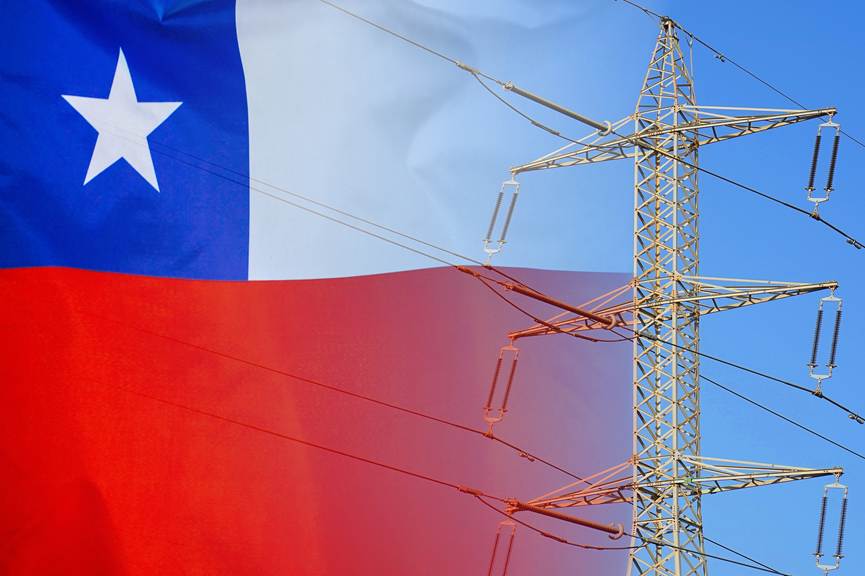
IMAGE 1 – Chile’s flag and energy infrastructure
THE INVISIBLE INFRASTRUCTURE OF EVERYDAY LIFE
Every morning, millions of people across Chile switch on lights, charge mobile phones, prepare breakfast, or begin work without giving much thought to the infrastructure that makes those activities possible. Electricity has become so deeply embedded in daily life that its presence is rarely noticed unless something goes wrong.
In central Chile, much of this invisible infrastructure is operated by Chilquinta. The company distributes electricity throughout much of the Valparaíso Region, serving cities such as Valparaíso, Viña del Mar, Quilpué, San Felipe, Los Andes, and San Antonio. Its network of poles, cables, substations, transformers, and control systems connects more than 675,000 customers to Chile's national electricity system.
For most consumers, ownership is largely irrelevant. Electricity arrives regardless of who owns the infrastructure behind it. Yet ownership can matter when infrastructure is understood not only as an economic asset but as part of broader discussions regarding national development, foreign investment, state ownership, and economic security.
In June 2020, ownership of Chilquinta changed in a way that transformed the company from a regional Chilean utility into part of a global network controlled by one of the largest state-owned enterprises in the world.
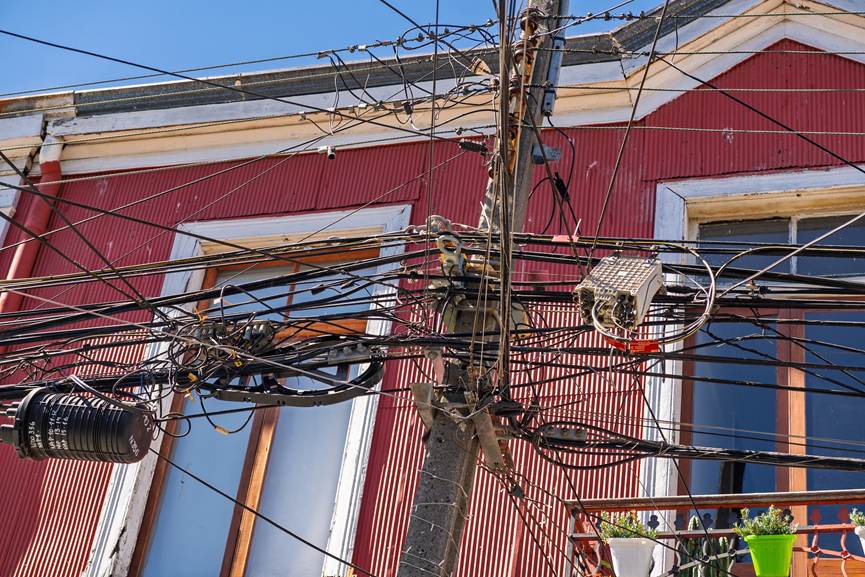
IMAGE 2 – Electricity cables in Valparaiso
A CENTURY-OLD COMPANY IN CHILE'S ENERGY HISTORY
The roots of Chilquinta can be traced to the early twentieth century, when Chile was expanding electricity generation and distribution systems to support urbanization and industrial development.
Over the decades, ownership and organizational structures evolved alongside broader changes in Chile's economy. Like many utility companies around the world, Chilquinta experienced periods of public ownership, privatization, expansion, and consolidation.
By the late twentieth century, Chile had emerged as one of Latin America's most open economies and had attracted substantial foreign investment across multiple sectors, including energy. Electricity distribution gradually became dominated by major international firms operating under the country's regulatory framework.
In 1999, Chilquinta became part of a consortium led by the U.S.-based energy company Sempra Energy. During the following years, the company expanded and consolidated its position as one of Chile's most important electricity distributors.

IMAGE 3 – Old electrified trams in Valparaiso
STATE GRID ARRIVES IN CHILE
In October 2019, Sempra Energy announced an agreement to sell its Chilean electricity assets to State Grid International Development, a subsidiary of State Grid Corporation of China.
The transaction was completed in June 2020. Valued at approximately US$2.5 billion, the acquisition represented one of the largest Chinese investments ever made in Chile and immediately positioned State Grid as a major actor within the country's electricity sector.
Yet the deal was also part of a much larger story.
State Grid Corporation of China is not an ordinary utility company. Founded in 2002 and headquartered in Beijing, it is the world's largest electric utility by revenue and customer base.
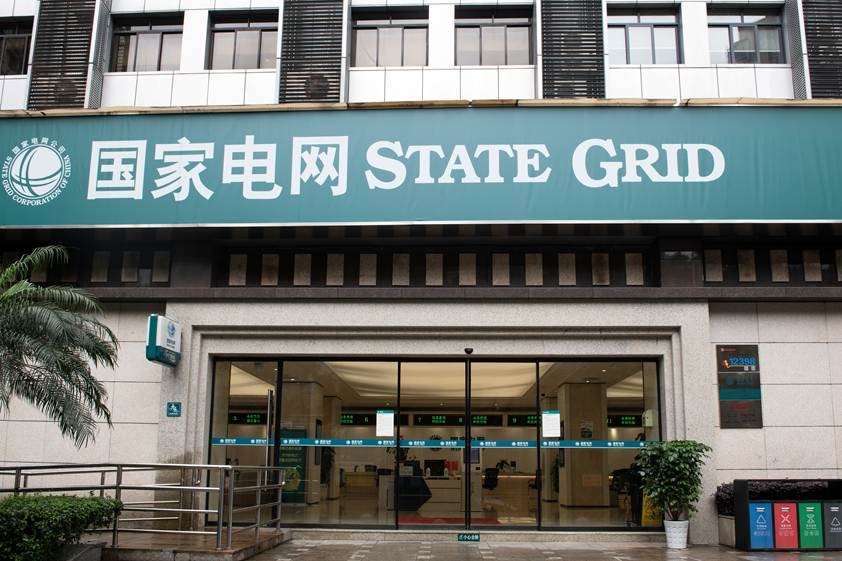
IMAGE 4 – State Grid provincial office in China
FROM VALPARAÍSO TO BEIJING: UNDERSTANDING STATE GRID
To understand why the acquisition attracted attention from regulators and policymakers, it is necessary to examine the governance structure behind State Grid.
Unlike privately owned multinational corporations, State Grid is a state-owned enterprise. The company is supervised by SASAC, an institution created by the Chinese government in 2003 to manage some of the country's largest strategic enterprises.
Assessing the extent of SASAC’s and ultimately the Chinese Communist Party (CCP)–involvement in the day-to-day management of these enterprises, and determining how
that level of intervention aligns with applicable corporate governance, securities and competition laws in the relevant jurisdiction has been one of the fundamental challenges affecting Chinese state-owned enterprises’ (SOEs) activities overseas. This challenge reflects a broader issue: the difficulty that Western countries and institutions often face in grasping the distinctive features of China’s economy, its unique evolution, and the complex interplay between the State, the CCP, the economy, and SOEs.
GRAPHIC 1 – Ownership Structure of SGID
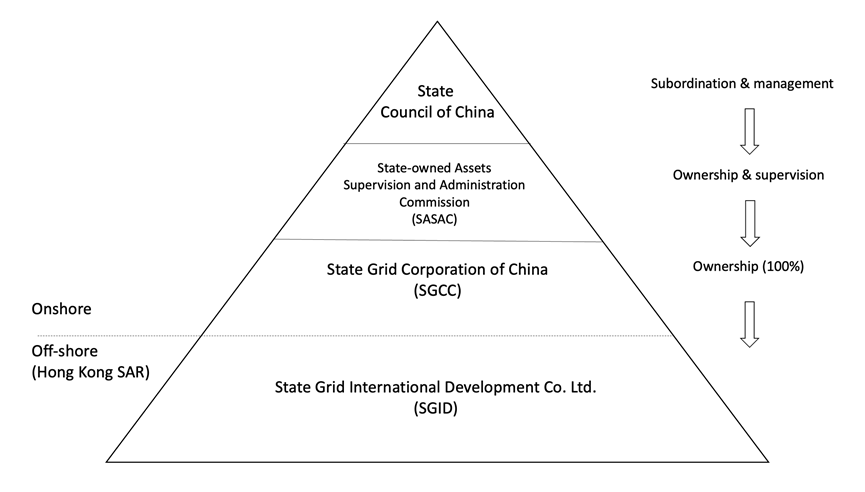
Source: chart by Ignacio Tornero
WHEN OWNERSHIP BECAME A PUBLIC QUESTION
The acquisition required approval from Chile's competition authority, the Fiscalía Nacional Económica (FNE).
At first glance, the review resembled a conventional merger-control process. Yet regulators soon confronted questions rarely encountered in transactions involving Western firms. Understanding State Grid required understanding SASAC.
In its analysis, the FNE assessed the specific functions that SASAC has over Chinese central SOEs (i.e., supervision and management, preservation of assets, appointment and removal of top executives, etc.) and then they were evaluated pursuant to Chilean antitrust and securities law. In practice, SASAC is part of a broader system in which the Party exercises its leadership over the Chinese economy through four main pillars that are state ownership, the Party cadre management system, the Party’s participation in corporate decision-making, and intra-Party supervision.
WHY THE CHILQUINTA CASE MATTERS BEYOND CHILE
Across Latin America, Chinese firms have become major investors in energy, mining, transportation, telecommunications, and infrastructure.
At the same time, policymakers around the world are paying increasing attention to concepts such as economic security, supply-chain resilience, strategic infrastructure, and foreign investment screening.
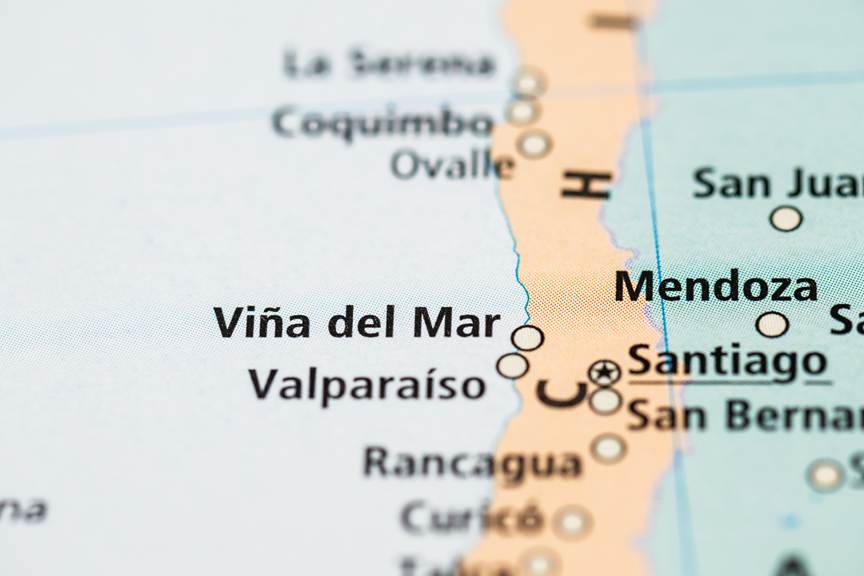
MAP – Valparaiso Region
THE GRID AS A WINDOW INTO GLOBAL CHINA
Even though there have been changes in the organization chart of the Chilquinta group of companies resulting in the entry of several Chinese executives to key management positions, the physical infrastructure of Chilquinta looks much the same today as it did before 2020. Consumers continue receiving electricity through the same poles, cables, transformers, and substations. However, there have been a few issues affecting the operation of the company like fines due to irregular electricity billing and investigation over power outages. Nevertheless, it is complex to determine whether these circumstances are exclusively attributed to the new management of Chilquinta.
The story of Chilquinta illustrates one of the most important characteristics of Global China. China's presence overseas is not limited to megaprojects. It is increasingly embedded within the ordinary infrastructure that supports everyday life.
SOURCES
Tornero, I. (2026). Chinese State-Owned Enterprises in Latin America. The State-owned Assets Supervision and Administration Commission and State Grid’s Acquisition of Chilquinta in Chile. Chinese Journal of Transnational Law, 0(0). https://doi.org/10.1177/2753412X261456099
More Research
1/2