
Research / MGC Stories / Khorgos
Khorgos: The Border That Became a Mall
Khorgos — China–Kazakhstan border
Published:
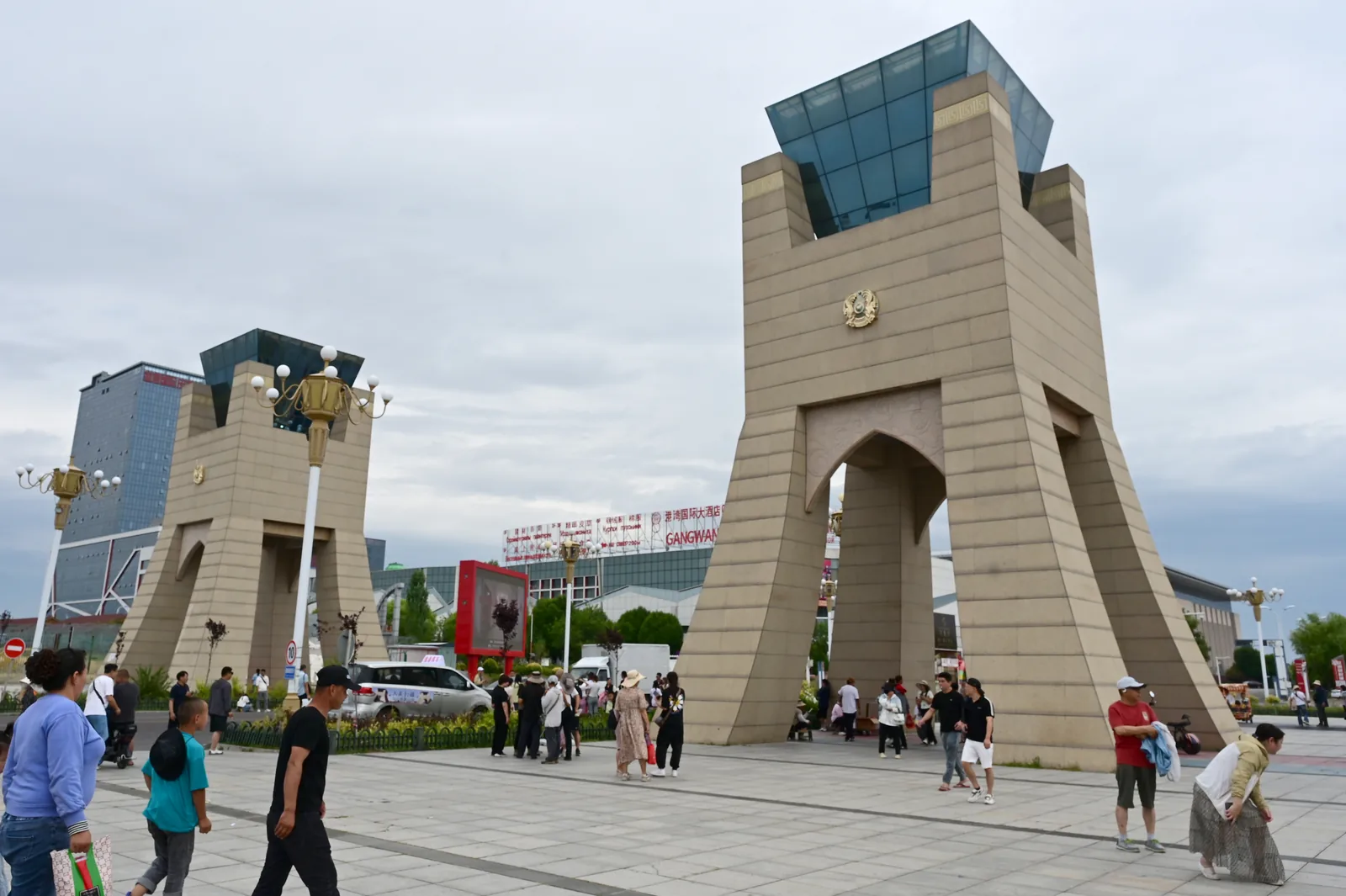
The largest international border between China and Kazakhstan is located at Khorgos (Қорғас/霍尔果斯/Хоргос). This border site, which includes a duty-free SEZ and a dry port, connects the Chinese city of Ürümqi with Almaty, the largest city in Kazakhstan. This border area has been active for over a century, with periods of closure and re-opening, of growth and decline.
- China–Kazakhstan
- Border
- 2006–2012 (agreed in the 2000s)
- Built
- 560 hectares
- Area
- Duty-free SEZ + dry port
- Type
- Ürümqi ↔ Almaty
- Connects
- Khorgos Eastern Gate SEZ (2025)
- Newest zone
In the 2000s, Chinese President Hu Jintao and Kazakhstani President Nursultan Nazarbayev agreed to establish a duty-free trade zone. Construction began in 2006 and completed in 2012. This border enclave, carved out of territory from both countries and cross-cut by the international boundary, would become the Khorgos International Center for Border Cooperation (ICBC).
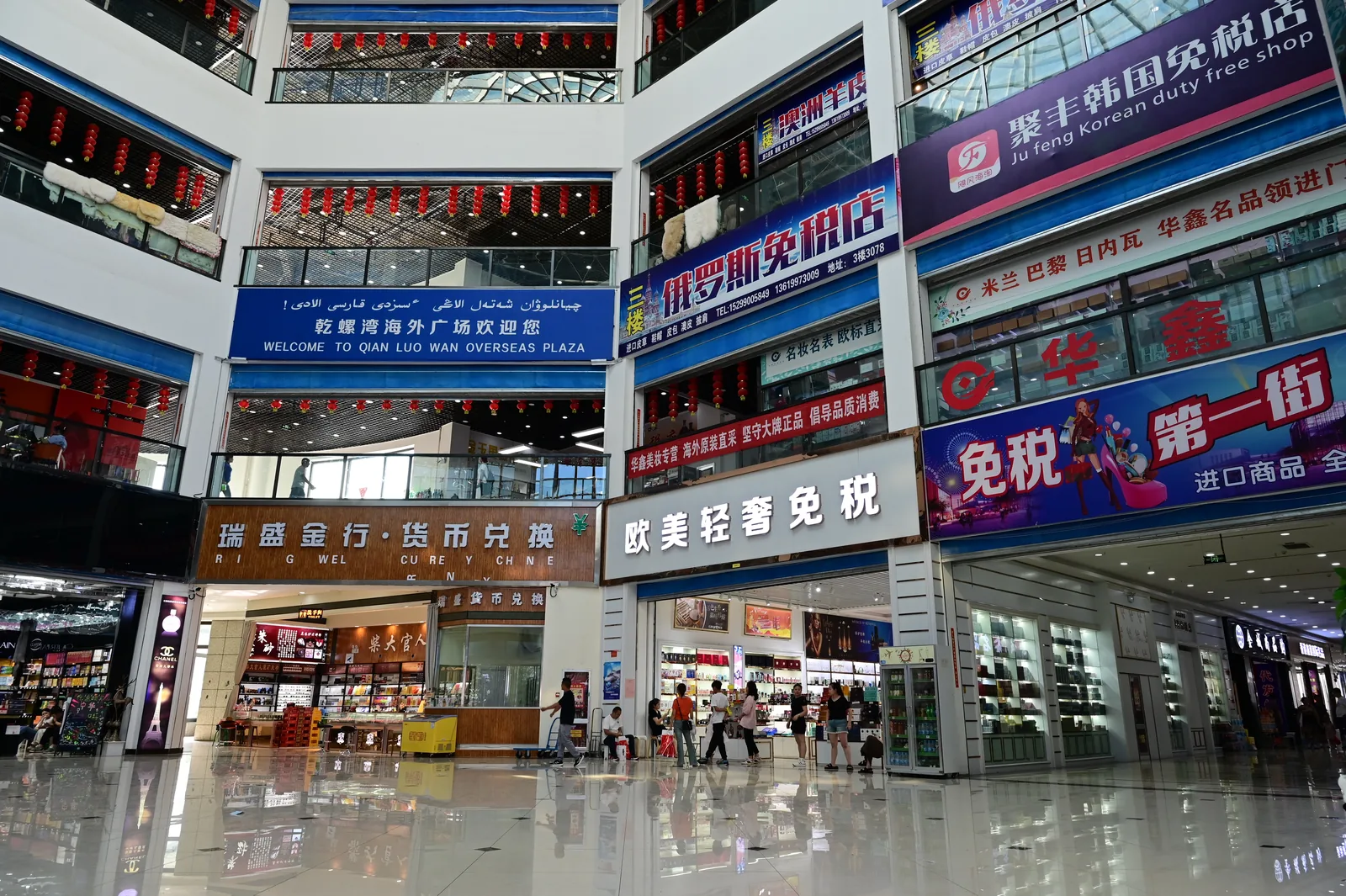
Both countries would tout the ICBC as important for their national development plans but since 2013, Chinese officials and diplomats have also stressed that the ICBC in an important part of the Belt and Road Initiative-branded overland Silk Road Economic Belt. To facilitate the development of the border, China’s Khorgos City (霍尔果斯市) was created and became a focus for urban and economic development.
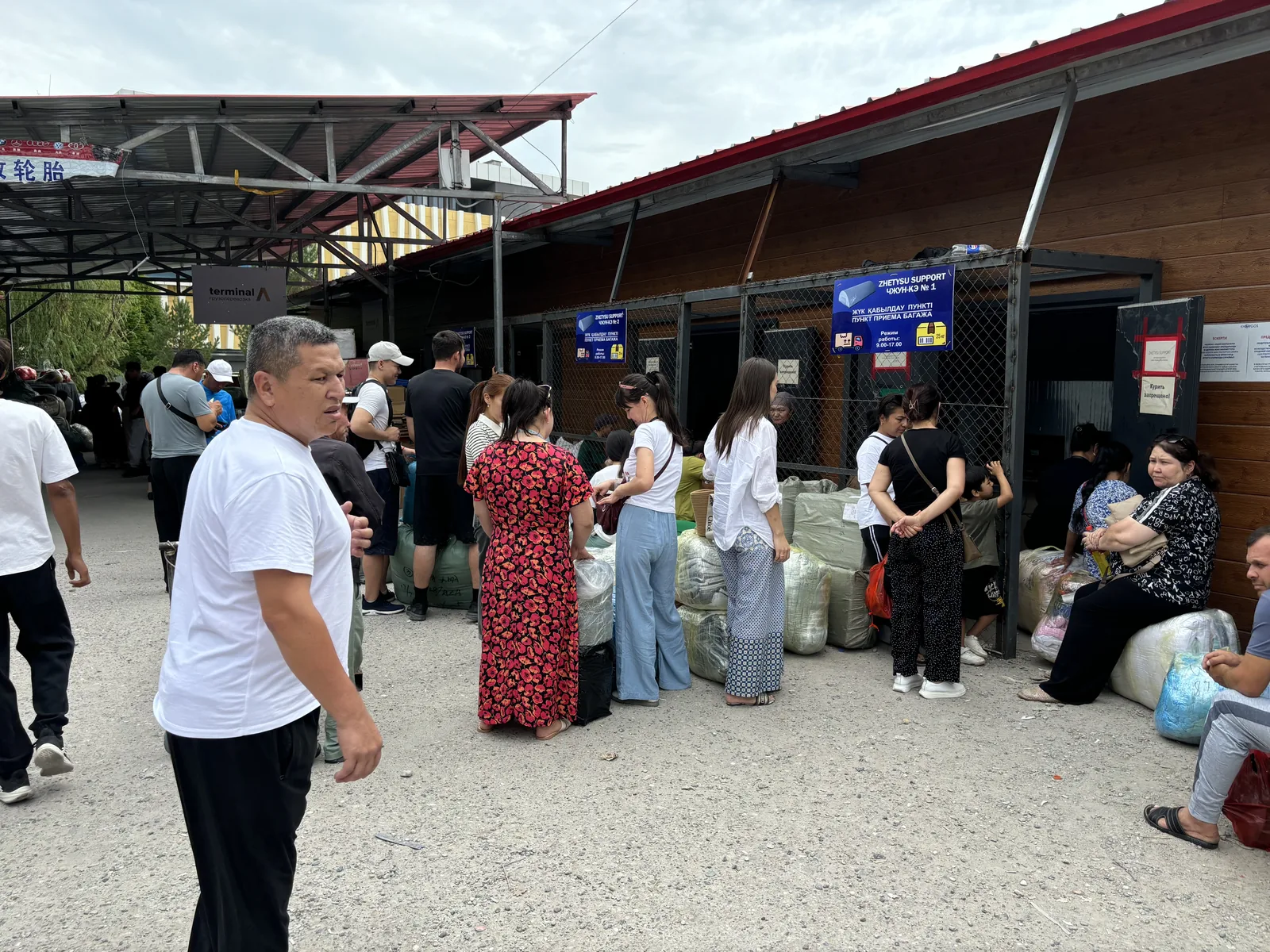
The Kazakhstani side would also develop, as the SEZ connected to Zharkent and the newly founded urban centers of Nurkent and Khorgos (several sites carry this name). In 2025 another adjacent SEZ was declared: the Khorgos Eastern Gate SEZ which is entirely within Kazakhstan. Despite the apparent international symmetry of trans-border development in and around the ICBC, the Chinese side has grown more quickly and expansively than the Kazakhstani side.
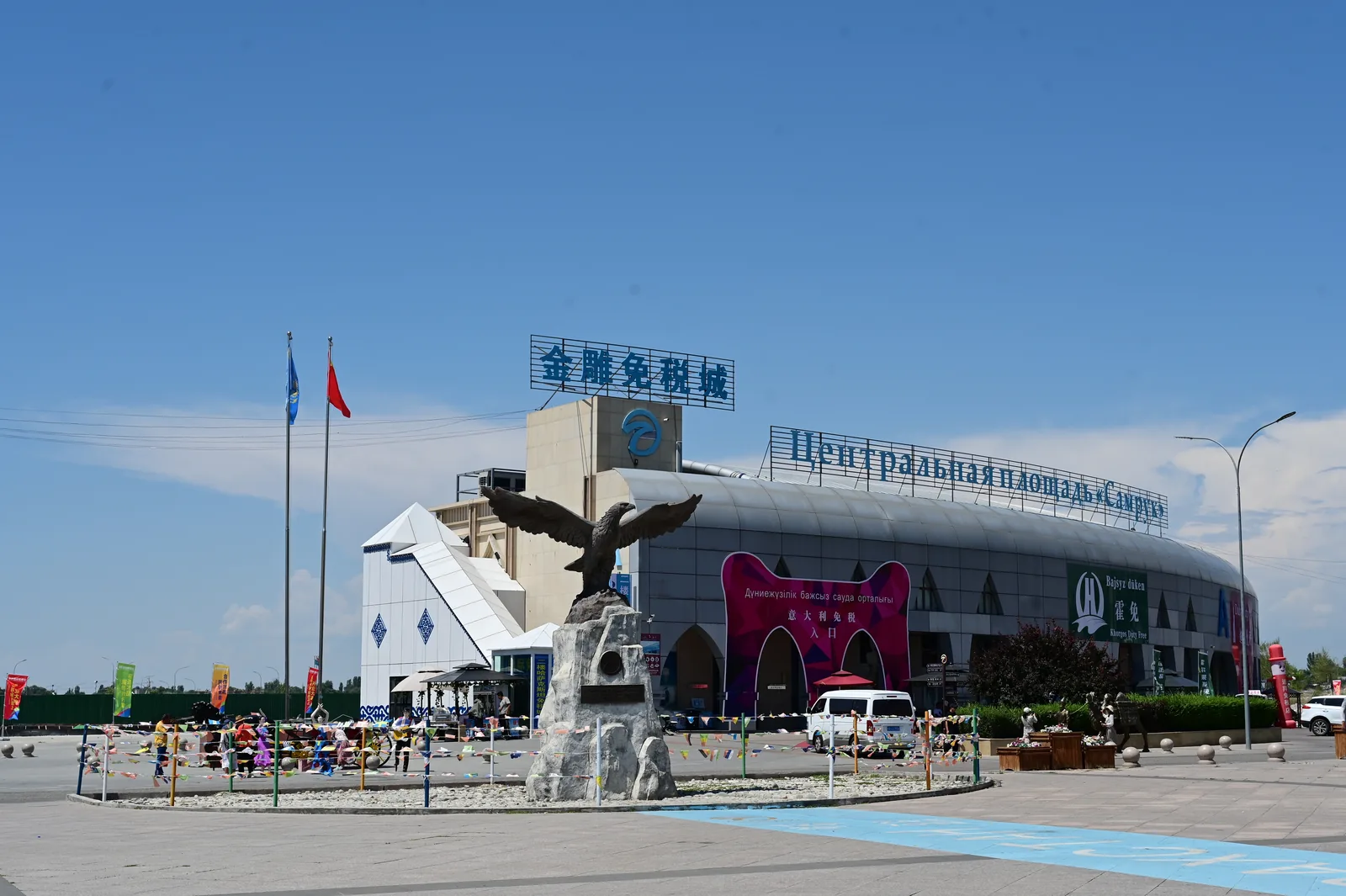
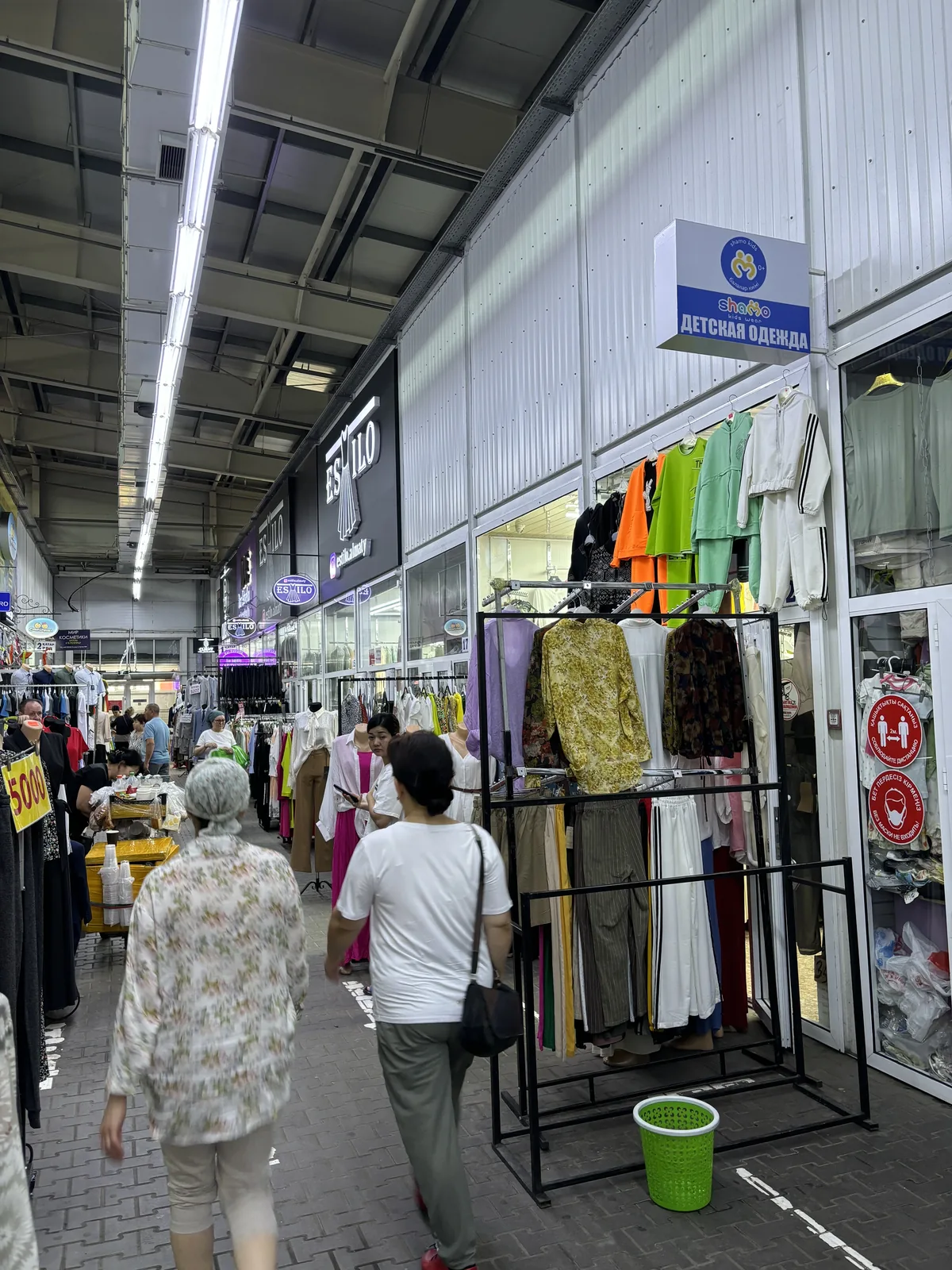
Covering 560 hectares, Khorgos ICBC has become a center for traders and tourists. It is packed with shops selling clothes, make-up, shoes, cigarettes, and more. People come alone or in groups, taking advantage of the Center’s visa- and tax-free schemes to buy small amounts or in bulk.
The ICBC is part of a larger transboundary urbanization. Logistical upgrades have led to the rise of freight traffic on both rail and paved highways. Overland buses have been to connect shopkeepers in Kazakhstan to goods in China. For example, one Uyghur Kazakhstani shopkeeper I interviewed in 2024 used to make frequent trips to Ürümqi to purchase Chinese toys to bring back to Zharkent.
Another Kazakhstani businessman frequently traveled between Almaty and Zharkent, where he imported advertising technologies for use by Kazakhstani businesses.
In 2024, ICBC sellers reported a decline in both Kazakhstani and Chinese consumers both during and after the border closure. This was attributed both to the coronavirus pandemic and to changing purchasing habits through online platforms. Today the Center on both sides of the boundary is dominated by Chinese shopkeepers and tourists, who largely consume Chinese goods and Chinese-derived narratives of the encounter between China and its western neighbor.
- Grant A (2020) Crossing Khorgos: Soft power, security, and suspect loyalties at the Sino-Kazakh boundary. Political Geography 76: 1–10.
- Damiani I and Hiliquin M (2025) Infrared Borderlands: Belt and Road Initiative and Local Planning – Khorgos Interdependencies, Imaginaries and Territorial Realities. GeoProgress Journal 12(2). Università degli Studi del Piemonte Orientale “Amedeo Avogadro”: 31–56.
- Author fieldwork and interviews — Khorgos & Zharkent, 2024
- Photographs: Andrew Grant, July 2024
- Cultural Khorgos — Giulia Sciorati
- SEZ
- Special Economic Zone — a demarcated area where normal trade, customs and tax rules are relaxed to attract investment and cross-border commerce.
- dry port
- An inland logistics hub linked by rail and road to seaports and border crossings, where containers are consolidated, stored and cleared through customs.
- ICBC
- The Khorgos International Center for Border Cooperation — a 560-hectare duty-free enclave straddling the China–Kazakhstan boundary, where visitors from both countries shop visa- and tax-free.
- Silk Road Economic Belt
- The overland half of China’s Belt and Road Initiative — a network of rail, road and logistics corridors linking China to Central Asia, Russia and Europe.
Cite This
Grant, A. (2026). Khorgos: The Border That Became a Mall. Mapping Global China, MGC Stories. https://doi.org/10.5281/zenodo.24092758
Share your Global China story
These stories come from people who were there — researchers, journalists, and residents of the places China’s global presence is built in. If you know such a place, tell us about it: a market, a border post, a plant, a campus. We work with you on the reporting, the data and the map.
Propose a story